
Dental & Oral Care for the Elderly: Tips & Routines
Introduction
Of all the jobs that come with looking after an older adult, mouth care is the one that quietly gets forgotten. Meals, medication and mobility get the attention; teeth and gums slip to the bottom of the list.
It’s an easy thing to let slide, and good oral care for elderly parents often does. Not through neglect, but because the task itself gets harder with age, and because nobody likes to make a fuss about someone else’s mouth. The trouble is that a sore or unhealthy mouth affects eating, comfort and confidence far more than people expect.
The good news is that oral care for elderly parents isn’t complicated. A soft brush, some fluoride toothpaste and a steady daily routine cover most of what matters.
Daily routines like brushing teeth become much easier with personal care services in Walsall, where carers can provide gentle support while helping older adults stay comfortable and independent. So here are the practical routines that keep older mouths healthy, and the oral care for elderly loved ones a carer can quietly take off your hands.
Why Oral Care Becomes More Difficult for Older Adults
It usually isn’t neglect. Three things quietly get in the way.
Stiff, arthritic hands make gripping a toothbrush and cleaning between teeth genuinely difficult. Many common medicines cause a dry mouth, which speeds up decay. And when memory fades, brushing is one of the first routines to slip.
Add dentures into the mix, and it’s easy to see why a mouth that was fine at seventy needs a bit more help at eighty. That’s why oral care belongs firmly within everyday personal care.
A Simple Daily Oral Hygiene Routine for Seniors
Keep it simple and keep it regular. That beats any gadget, and the elderly dental care tips that matter most are the boring ones done every day.
Brushing Tips for Seniors
For good oral health, brush your teeth twice daily using fluoride toothpaste, once before bed and once at another convenient time during the day. Choose a soft-bristled toothbrush with a small head, whether manual or electric, and clean gently along the gum line using light, careful strokes.
Don’t forget the gaps. Cleaning between the teeth once a day with floss or small interdental brushes clears what a toothbrush misses, and the little brushes are usually kinder to older hands than floss.
For arthritic hands, an electric toothbrush or a chunky handle grip can make oral hygiene for seniors far less of a struggle. Adding a few gentle exercises for arthritic hands to the daily routine may also help improve flexibility and grip, making brushing and other everyday tasks feel more comfortable over time.
Looking After Dentures as Part of Senior Dental Care
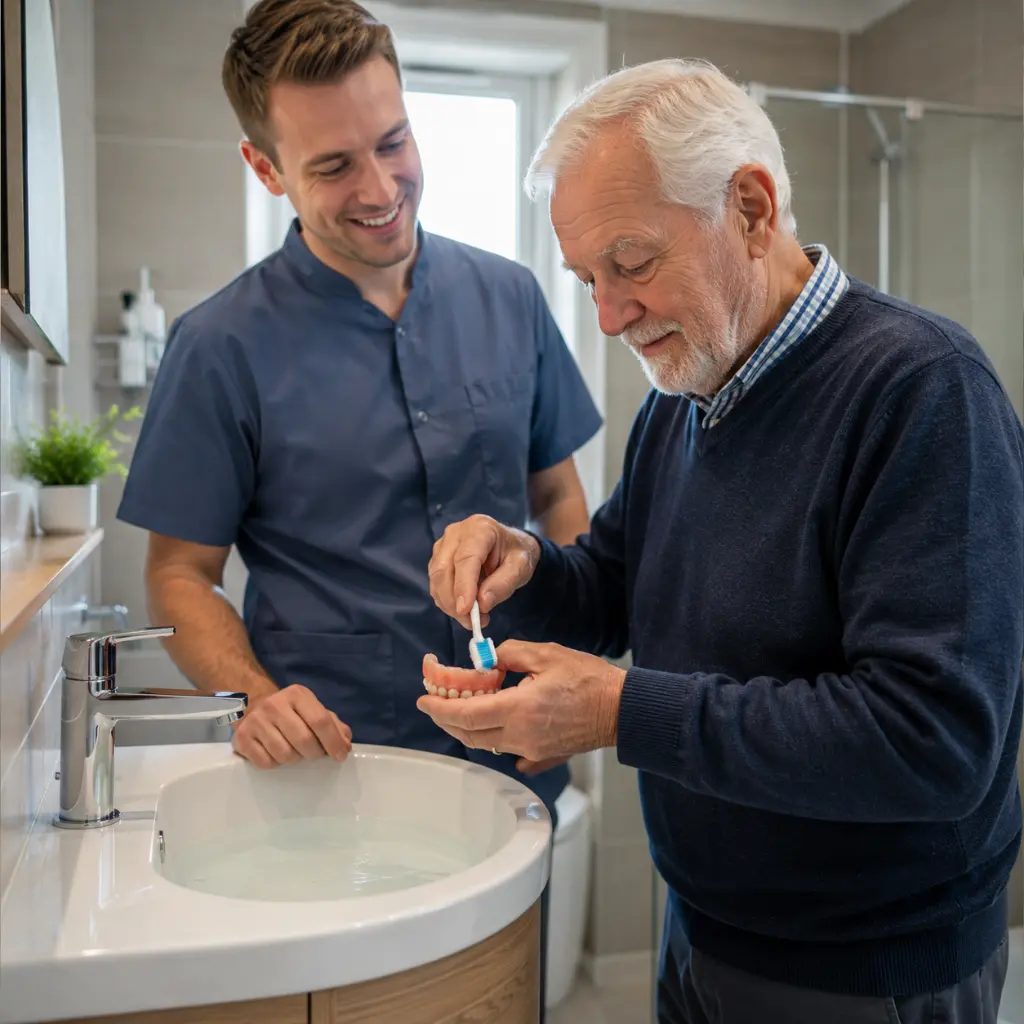
Dentures need daily attention too. Brush them over a basin of water so they don’t smash if dropped, clean them with a denture brush and mild soap rather than toothpaste, and take them out overnight to rest the gums.
Store dentures according to your dentist’s or manufacturer’s advice, often in water when they’re not being worn, to help prevent them drying out or becoming damaged.
Dry Mouth and Other Common Senior Dental Care Problems
A few issues crop up again and again. Dry mouth is a big one, often a side effect of medication, and it leaves teeth more prone to decay.
Sipping water throughout the day helps, and staying well hydrated matters more than people think. Sugar-free gum can help stimulate saliva for some people, though it’s worth checking with a dentist first if dentures or jaw problems make chewing uncomfortable.
Bleeding gums, bad breath and sensitivity are common too, and a diet heavy on sugary tea or biscuits doesn’t help, so healthier everyday eating protects teeth as well as the rest of the body. Including nutrient-rich choices, such as vitamin B12 foods, as part of a balanced diet also supports overall wellbeing and healthy ageing. None of these should be shrugged off as just getting old.
Dental Care for the Elderly: Warning Signs to Watch
Some things really do need a professional eye. Book a dental check if you spot any of these.
A mouth ulcer or sore patch that hasn’t healed in three weeks, a lump, a loose tooth, ongoing pain, or gums that bleed regularly all warrant a look.
Good dental care for the elderly leans on prevention, and a check-up every year or two does more than any home routine can.
How Home Care Supports Elderly Oral Hygiene Day to Day
This is where a bit of help changes everything. The routine is simple; doing it every single day is the hard part.
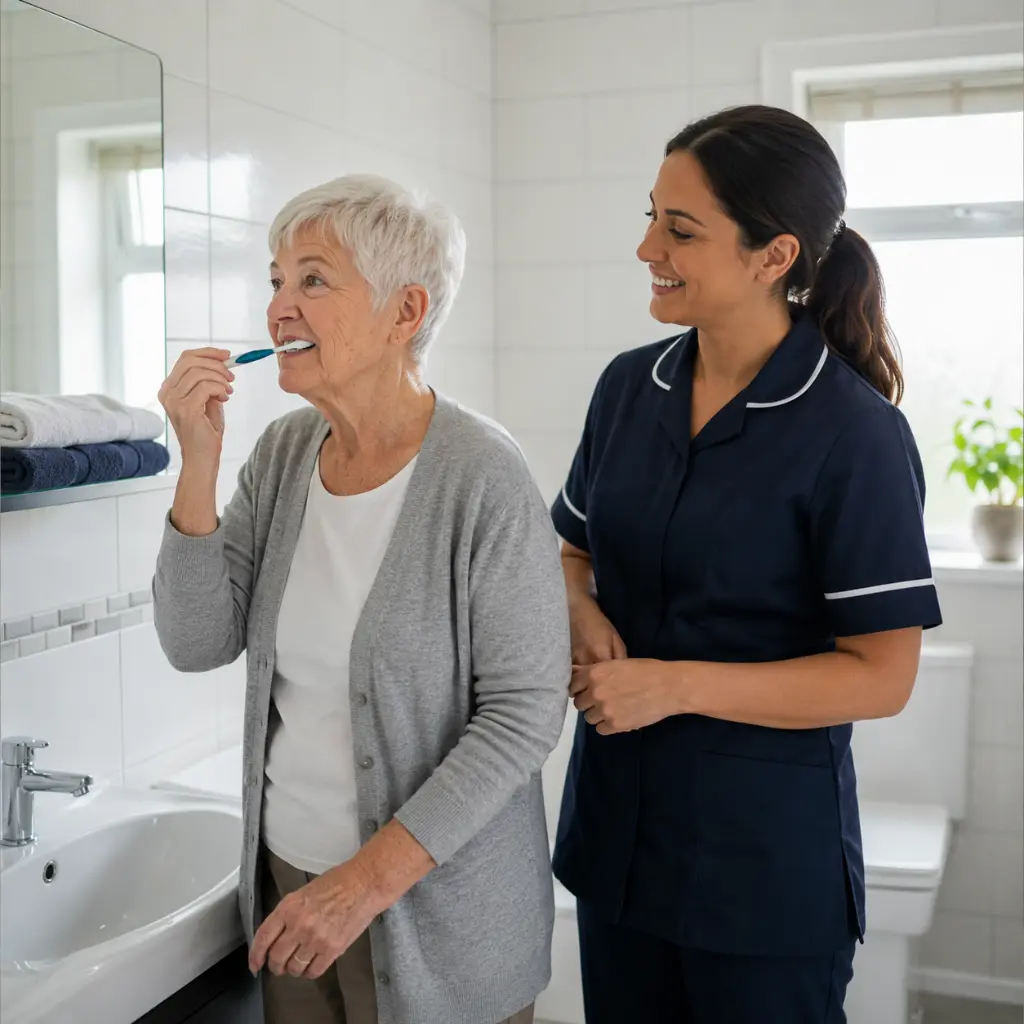
A carer makes brushing part of the morning and evening, offers a steadying hand or does it gently for someone who can’t, and takes care of dentures without any fuss. It’s one of those quiet, unglamorous jobs that makes a real difference to comfort and dignity.
There’s dignity in how it’s done, too. Mouth care handled gently, at the person’s own pace and without rushing or embarrassment, is a skill our carers take seriously.
A familiar carer also spots the early warning signs, a new sore spot or a wince at cold water, and flags them to you or nudges a dentist appointment. For families spread across the area, that daily eye is hard to replace.
Conclusion
Looking after oral health helps older adults stay comfortable, enjoy their favourite foods and feel confident day to day. Even small daily routines can make a lasting difference.
Vitality Care and Support Services provides respectful personal care that’s tailored to each individual, including support with oral hygiene whenever it’s needed. If you’re looking for compassionate home care that helps your loved one stay comfortable and independent, we’re always here for a friendly, no-obligation chat.