
Hearing Aids for Elderly People: How Home Care Helps Day to Day
Introduction
The telly is two notches louder than it used to be. Conversations have got shorter, and your dad has started saying pardon a lot, or worse, just nodding along to things he has not quite caught.
And the hearing aids the audiologist fitted three months ago? They are sitting in a drawer.
If any of that rings true, you are not alone. Getting hearing aids for elderly parents is often the easy part, and the daily reality of actually using them is where it tends to fall apart.
For many families, this is where everyday home care for older people becomes just as important as the hearing aids themselves. This piece is about the practical, everyday ways a carer helps an older person get real value from hearing aids for elderly relatives, not the audiology, but the bits in between appointments.
Because hearing aids for elderly people only work if they are worn, looked after, and matched with a home that is easy to hear in. Let us get into how that actually happens.
Why Hearing Aids for Elderly People End Up in the Drawer
Here is the honest truth. Hearing aids rarely go unused because they do not work, they get abandoned for boringly practical reasons.
Fiddly batteries that are hard to change with stiff fingers. A constant whistle nobody has shown them how to stop.
Then there is discomfort, forgetting, or a tube quietly blocked with wax. Living with elderly hearing loss is frustrating enough without a device that feels like hard work, so none of this is the person being difficult, it is just real life with a small, finicky gadget.
Daily Hearing Aid Care a Carer Can Help With
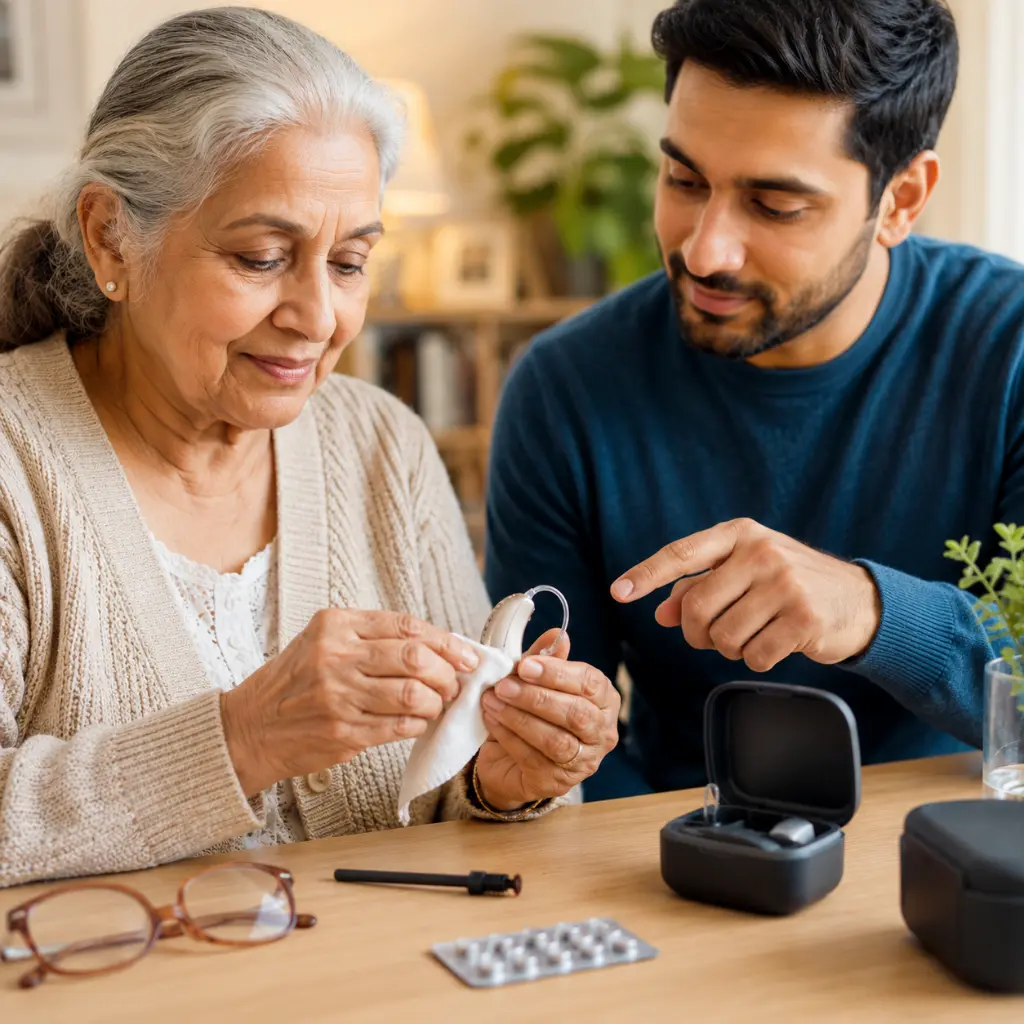
Good hearing aid care is mostly small, regular habits, and that is exactly the sort of thing a carer can fold into a morning and evening routine so it actually gets done.
That means wiping the aids and earmould with a soft, dry cloth at night, checking the tube is not blocked with wax, and keeping them dry, since most aids are splashproof rather than waterproof and need to come out before a shower. It means changing or charging the batteries before they die, opening the battery door overnight to air the aid, and keeping a spare set of batteries in the drawer.
None of this is clinical, and that is the point. It is steady, practical hearing aid support that keeps a working device working, without anyone needing to be a specialist.

Helping Older Adults Wear Hearing Aids Every Day
A surprising number of hearing aids for older adults go unused simply because they are awkward to put in, or uncomfortable for the first few weeks. Stiff or arthritic fingers make a fiddly aid genuinely hard to manage alone.
A carer can help insert them correctly, encourage building wear time up gradually, and gently keep the habit going on the days motivation dips. The same morning routine can also include a few gentle senior stretching exercises, helping older adults begin the day feeling more comfortable, mobile and ready for everyday activities. Building these small habits into the start of the day makes it easier for hearing aids to become part of the routine too. The advice from audiologists is to wear them from morning to night so the brain adapts, and a familiar daily prompt makes that far more likely to happen.
They will also notice when something is off. A hearing aid that whistles constantly usually means a poor fit or a wax blockage, and that is worth an audiology visit rather than another month in the drawer.
Making the Home Easier for Hearing Loss in Elderly People
Even the best aids struggle in a noisy, echoey room with three people talking at once. So a big part of the job is simply making the home easier to hear in.
That looks like getting someone’s attention before you start, facing them so they can see your lips, and keeping your face in good light. It means turning the television down when you talk, letting one person speak at a time, and slowing down rather than shouting, because shouting distorts speech more than it helps.
Carers tend to do this instinctively, and they quietly model it for the rest of the family too. It helps whether the aids are in or not.
How Hearing Aid Support Keeps Older Adults Connected
Here is what all the cleaning and battery-changing is really for. It is not about the device, it is about keeping your mum in the conversation.
When hearing gets hard, people withdraw. They stop joining in at the table, let calls go unanswered, and slowly pull back, and that quiet retreat is one of the ways elderly hearing loss feeds loneliness in older adults. For someone who has also lost a husband, wife or long-term partner, hearing difficulties can make loneliness after bereavement even harder by creating extra barriers to everyday conversation and companionship. Pairing well-kept aids with warm, companionship-led care is how you help someone stay connected to the people around them.
When to Go Back to the Professionals
A carer handles the everyday, but some things belong with a GP or an audiologist, and it helps to know where the line is.
Book a professional appointment for a poor fit that cleaning does not fix, pain or discharge, suspected earwax, or aids that have never felt right. A sudden drop in hearing in one or both ears should be treated as urgent, so see a GP quickly rather than waiting.
For getting set up in the first place, NHS hearing aids are free after a GP referral and assessment, and they include batteries, repairs and aftercare.
How Vitality Fits Into This
This is the kind of quiet, practical support we build into everyday care. Across Aldridge and the wider Walsall area, our carers can weave hearing aid routines into daily home care visits, prompt your relative to wear them, keep the home communication-friendly, and flag any changes back to you and the audiology team.
At Vitality Care and Support Services, the goal is never the gadget for its own sake. It is your dad hearing the football commentary again, and catching what his grandchildren say the first time.
Helping Everyday Conversations Stay Part of Everyday Life
Looking after hearing aids is about far more than cleaning a device. It is about helping someone stay connected with family conversations, favourite television programmes and the people around them.
Across Aldridge and Walsall, our carers gently support everyday hearing aid routines as part of personalised home care. If your loved one would benefit from a little encouragement or practical help, we would be delighted to talk through how we can help.