Vitamin B12 Foods for Older Adults: What to Eat and How Home Care Helps
Introduction
A couple of boiled eggs. A tin of sardines on toast. Between them, these everyday plates cover most of what an older person needs, because they’re some of the richest vitamin B12 foods you can put on a table.
The reason that matters is quiet but real. As we age, the body absorbs B12 less easily, and a slow shortfall can build over months, showing up as tiredness, forgetfulness or just not feeling right. It’s easy to write those off as ageing when the fix might partly be on the plate.
This isn’t about overhauling your mum’s kitchen. It’s about knowing which vitamin B12 foods genuinely pull their weight, and working a few of them into meals she already likes.
Good nutrition is easier to maintain with professional elderly care at home, where carers can help with shopping, meal preparation and daily routines. So here’s a plain guide to the best vitamin B12 foods for older adults, why B12 matters, and how a hand at home keeps good food coming.
Why Vitamin B12 Foods Matter More As You Age
One of vitamin B12’s key roles is helping the body produce red blood cells while supporting the normal function of the nerves. Without enough of it, some people may notice reduced energy, trouble thinking clearly, or a general feeling of being run down.
Here’s the catch with age. As we age, the stomach often produces less stomach acid and intrinsic factors, making it harder for some older adults to absorb vitamin B12 from food.
That’s why it pays to be a little deliberate about it, rather than waiting for problems.
The Best Foods Rich in Vitamin B12
The strongest sources are animal foods, and a little goes a long way.
Everyday Vitamin B12-Rich Foods for Seniors
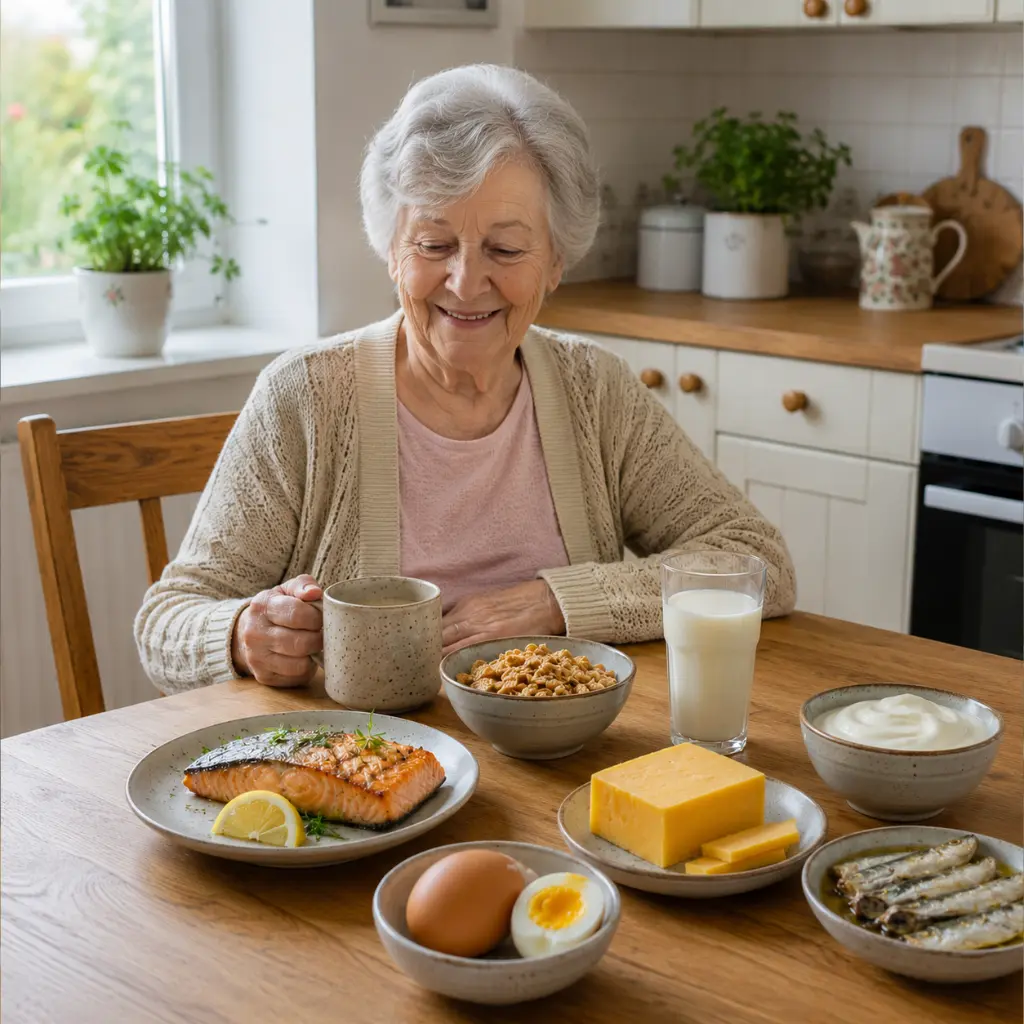
The reliable vitamin B12-rich foods for seniors are meat, fish, eggs and dairy. Oily fish like salmon and sardines, a couple of boiled eggs, a glass of milk or a bit of cheese all count. If your mum eats these regularly, she’s likely getting a steady supply.
Plant-Based Foods Rich in Vitamin B12
This is where vegetarians, and especially vegans, need to pay attention. Very few plant foods contain B12 naturally, so the foods rich in vitamin B12 for a plant-based eater are mostly fortified ones: fortified breakfast cereals, fortified plant milks and yeast extract such as Marmite. If your dad has cut out meat, don’t leave this to chance, and speak to a healthcare professional about whether a supplement might be appropriate.
Spotting B12 Deficiency in Elderly Parents
Low B12 rarely announces itself. It builds slowly, which is exactly why it’s so easy to miss.
The signs of B12 deficiency in older adults can be vague: lasting tiredness, pale skin, breathlessness, a sore mouth, pins and needles, or changes in memory and mood. Because these overlap with so many other things, including ordinary ageing, none of them proves anything on its own. It’s also worth remembering that a UTI in the elderly can sometimes cause sudden confusion or changes in behaviour, so it’s important not to assume low B12 is always the cause of new symptoms.
So the sensible move is simple. If several of these signs of B12 deficiency in elderly parents show up together, ask the GP for a blood test rather than guessing.
Why Vitamin B12 Deficiency in Older Adults Happens
There’s usually a reason behind it. B12 deficiency in older adults is more common than families realise, and vitamin B12 deficiency in older adults usually comes down to absorption rather than diet.
The most common cause in the UK is pernicious anaemia, where the body can’t absorb B12 properly, and no amount of steak will fix that. Certain long-term medicines and stomach conditions can play a part too, as can a genuinely low-B12 diet.
This matters because it changes the fix. If the problem is absorption, food alone won’t be enough, and that’s a conversation for a healthcare professional, who can arrange the right treatment.
How Home Care Helps Older Adults Eat More Vitamin B12-Rich Foods
Knowing what to eat is one thing. Actually cooking it, day after day, when you’re tired or living alone, is another.
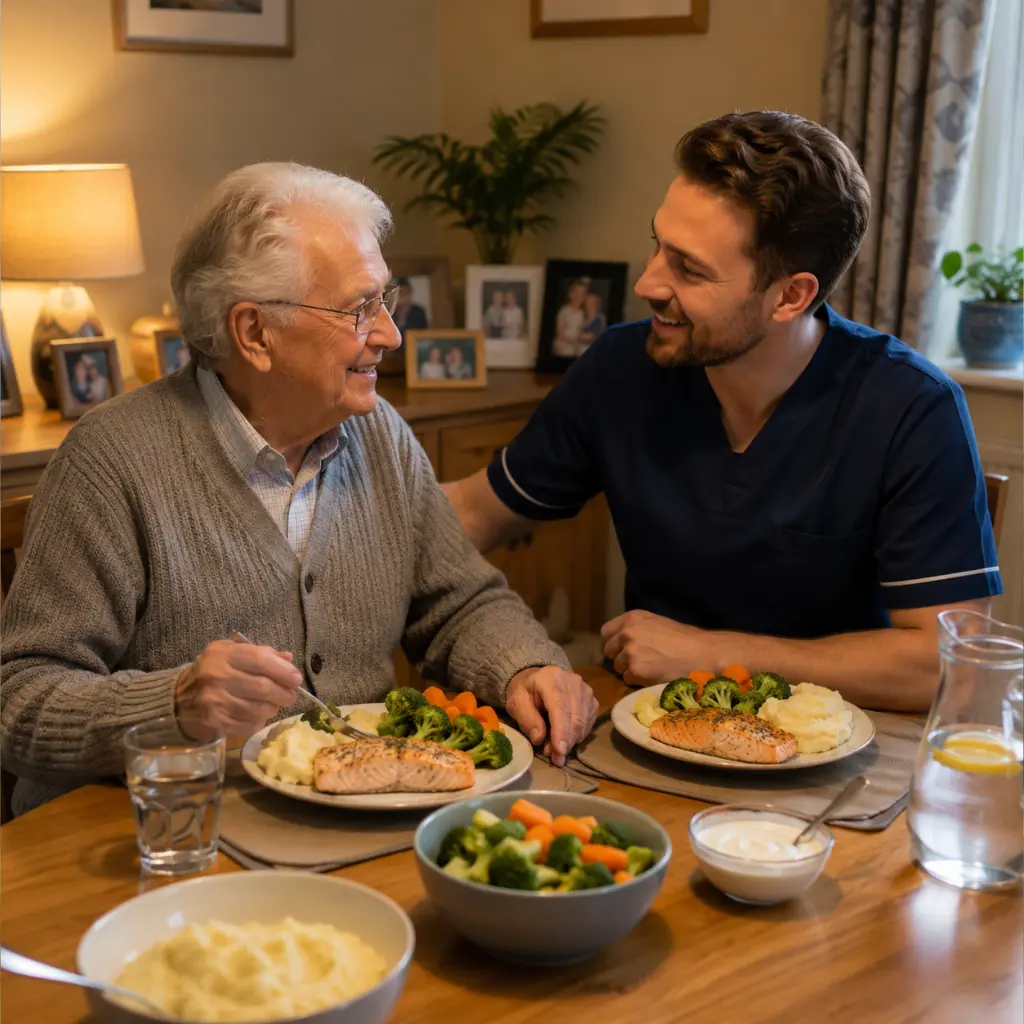
A carer takes that weight off. They can plan and prepare meals built around B12-rich recipes and a simple weekly plan, so the good stuff turns up on the plate without your mum having to think about it. Good oral care for the elderly also plays a part, making it easier to chew and enjoy a wider variety of nutritious foods with healthy teeth, gums and well-fitting dentures. Breakfast is an easy win, and eggs, fortified cereal or a milky drink make a solid start.
A familiar carer also notices the quiet changes: a shrinking appetite, meals left half-eaten, or that flat, tired look that’s worth flagging to you or the GP. And if a GP prescribes a B12 supplement, a carer offers medication reminders as simple prompts, so it isn’t forgotten.
Conclusion
Healthy eating isn’t about preparing complicated meals. It’s about having the right ingredients, simple recipes and a routine that’s easy to keep going.
At Vitality Care and Support Services, our carers help make mealtimes less of a challenge through shopping assistance, meal preparation and friendly companionship, so nutritious choices become part of everyday life. If you’d like to learn more about the practical support we provide, we’d love to hear from you.