
UTI in the Elderly: How to Spot It Early and How Home Care Helps
Home Care After a Hip Replacement: What Help Is Needed at Home
Returning home after hip replacement surgery is often a relief, but it can also feel overwhelming. Many older adults and families worry about mobility, pain, daily routines, and whether it is safe to cope without extra help. The first weeks at home are a critical part of recovery, and the right support can significantly influence comfort, confidence, and long-term outcomes. With compassionate care at home, recovery takes place in familiar surroundings while risks and stress are reduced. This guide explains what home care after hip replacement surgery involves and how professional support helps older adults recover safely while giving families peace of mind.
Understanding the first weeks after hip replacement at home
The early recovery period often brings fatigue, reduced movement, and discomfort. Everyday tasks may take longer, and confidence can dip, especially when moving around independently. While some people regain strength quickly, others need gradual support. Emotional reassurance is just as important as physical assistance. Care at home after hip replacement provides consistent encouragement, helping recovery progress at a safe and comfortable pace without unnecessary pressure.
Personal care and daily living support during recovery
After surgery, personal care routines often need temporary adjustments. Washing, dressing, or using the bathroom can feel challenging while mobility is limited, particularly for older adults who already manage additional needs. Sensitive support helps maintain dignity while reducing strain on the healing joint, much like care for visually impaired elderly at home, where routines are adapted thoughtfully to suit individual abilities. Trained carers provide calm, respectful assistance that promotes confidence and independence.
Support commonly includes
- Help with bathing and personal hygiene
- Assistance with dressing, particularly lower garments
- Support with toileting and night-time routines
- Gentle encouragement to rebuild daily habits
This approach ensures elderly care after hip replacement feels supportive rather than restrictive.
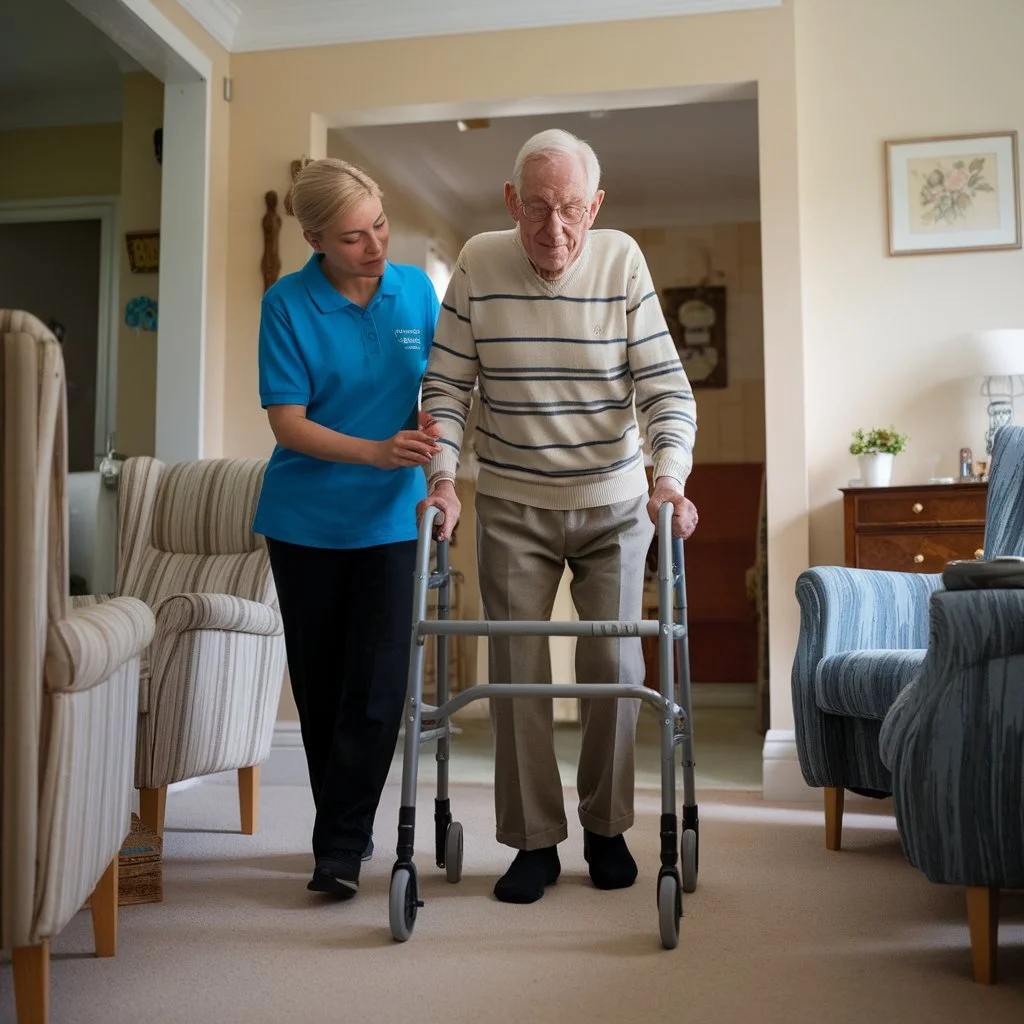
Mobility support and safe movement around the home
Balance and strength are often reduced during hip replacement recovery at home. Walking frames or sticks are commonly used, and safe guidance is essential. Carers assist with movement while helping older adults regain confidence in their ability to mobilise safely.
Mobility support may involve
- Safe use of walking aids
- Support when standing, sitting, or getting out of bed
- Supervision on stairs when needed
- Encouragement to move regularly without overexertion
This reduces anxiety and supports steady progress.
Preparing the home environment for a safe recovery
Preparing the home after hip replacement significantly lowers the risk of accidents. Simple changes make daily movement easier and safer without major disruption.
Helpful adjustments include
- Clearing walkways and removing loose rugs
- Improving lighting in hallways and bathrooms
- Adjusting furniture height for easier sitting and standing
- Adding non-slip mats and supportive bathroom aids
These steps improve home safety after hip replacement surgery and promote independence.
Managing pain medication and comfort at home
Effective pain management during hip replacement recovery supports both comfort and mobility. When pain is controlled, older adults are more likely to stay active and follow rehabilitation guidance. Carers help ensure medications are taken correctly and comfortably.
Support includes
- Medication reminders and organisation
- Monitoring comfort and wellbeing
- Encouraging rest and gentle movement
- Raising concerns if pain increases
This balanced care approach supports healing while reassuring families.
Physiotherapy rehabilitation and regaining strength
Physiotherapy exercises after hip replacement are essential for restoring mobility and stability. While exercises are prescribed by healthcare professionals, completing them consistently at home can be challenging. Supportive care encourages routine without rushing progress.
Rehabilitation support involves
- Encouraging exercises safely and correctly
- Building confidence through gentle progress
- Supporting motivation and consistency
- Understanding recovery timelines without pressure
Recovery support for elderly after hip surgery is most effective when physical and emotional needs are addressed together.
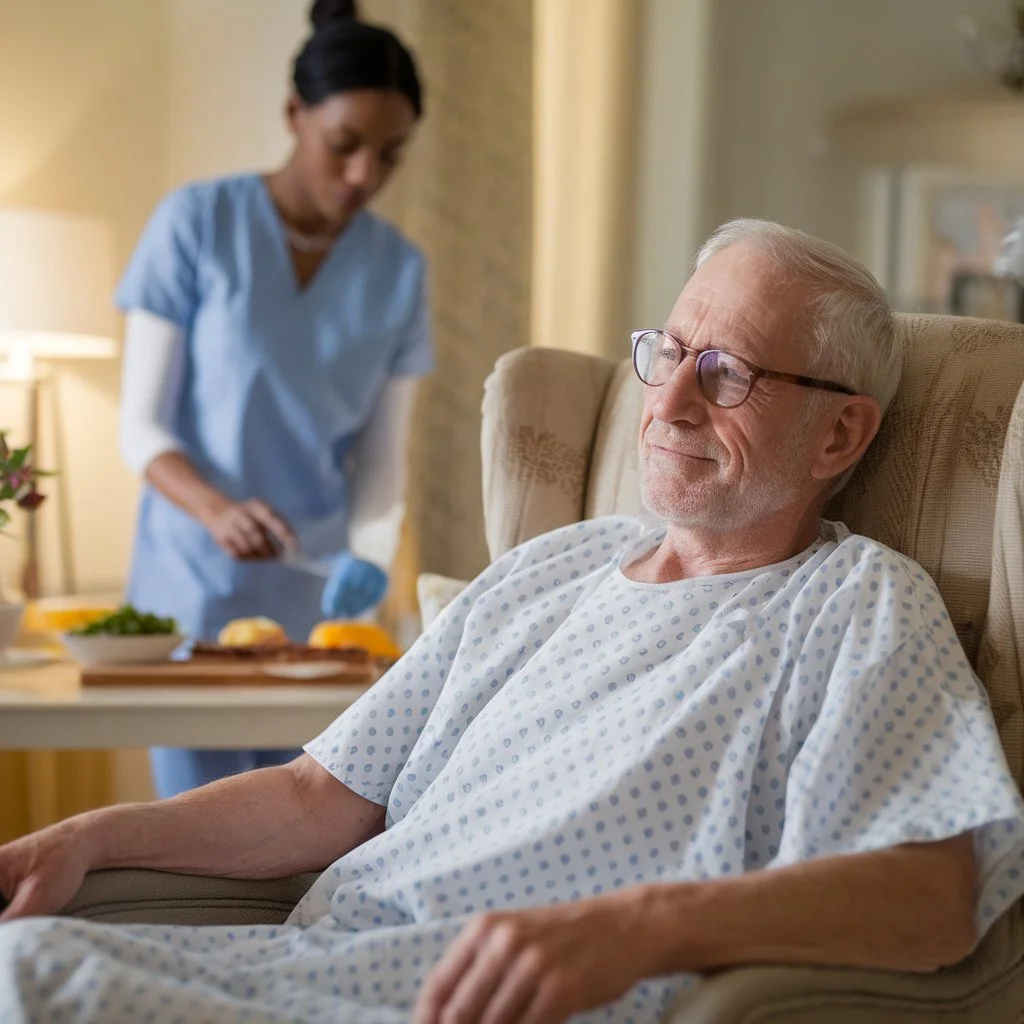
Nutrition hydration and healing after surgery
Proper nutrition supports healing and energy levels during recovery. Appetite may vary after surgery, and meal preparation can feel tiring. Home care ensures regular meals and hydration, helping recovery remain steady.
Support often includes
- Preparing balanced meals
- Encouraging regular fluids
- Assisting with shopping and meal planning
- Monitoring general wellbeing
Nutrition and healing after hip surgery are closely linked and benefit from consistent support.
Emotional wellbeing and staying independent at home
Recovery affects emotional wellbeing as much as physical health. Frustration, anxiety, or isolation are common. Companionship and reassurance help restore routine and confidence. Staying independent after hip replacement means having the right support to remain in control, not managing alone.
Professional home care provides encouragement and companionship that make recovery feel less daunting.
How professional home care supports families and carers
Families often want to help but balancing care with work and personal responsibilities can be difficult. Professional caregiver support after hip replacement reduces pressure while ensuring consistent, high-quality care. Support can be adjusted as recovery progresses.
Benefits for families include
- Peace of mind through reliable care
- Flexible support options
- Reduced physical and emotional strain
- Confidence in UK care standards and compliance
This allows families to focus on emotional support while care needs are professionally managed.
When to consider ongoing or extended support
Recovery times vary, and some older adults benefit from longer support. Ongoing home care may help if mobility improves slowly, confidence remains low, or other health conditions are present. Choosing continued support protects wellbeing and independence rather than limiting it.
Supporting a safe and confident recovery at home
Home care after hip replacement surgery enables older adults to recover with comfort, dignity, and reassurance. From personal care and mobility support to emotional wellbeing and family peace of mind, professional care plays a vital role in recovery. Speak with Vitality Care and Support Services today to arrange a personalised care assessment and discover tailored solutions that support comfort, independence, and confidence at home.
Check Our Latest Blog Posts
Vitamin B12 Foods for Older Adults: What to Eat and How Home Care Helps
Dental & Oral Care for the Elderly: Tips & Routines
Exercises for Arthritic Hands with Home Care
Memory Games for Seniors with Home Care Support
What Is Sundowning Dementia? Why People With Dementia Become More Agitated at Night
How Home Care Helps Reduce Loneliness After Bereavement
Hearing Aids for Elderly People: How Home Care Helps Day to Day
Senior Stretching Exercises: 5 Simple Bed Stretches to Start the Day
Heatwave Safety: How to Keep Elderly Parents Safe in Hot Weather