
Heatwave Safety: How to Keep Elderly Parents Safe in Hot Weather
Introduction
The forecast flashes red, thirty-one degrees by Thursday, and your first thought is your mum in that south-facing flat with the windows that barely open. She loves the warm weather. She also feels the heat far less than she used to, which is exactly the problem.
Heatwave safety is one of those things that feels minor until a hot spell actually arrives. For an older person, a few days of real heat can tip quite quickly from uncomfortable to potentially serious.
The reassuring part is that heatwave safety is mostly straightforward once you know what to watch for. A cool home, regular drinks, and someone keeping an eye out cover most of it.
This is also where trusted home care for older adults can provide valuable reassurance, helping with the small daily routines that become especially important during very hot weather. So this guide walks through practical heatwave safety for an older relative: keeping cool, staying hydrated, spotting trouble early, and how everyday support helps when the temperature climbs.
Why Heat Safety for Seniors Needs Extra Thought
As we age, the body’s cooling system simply works less efficiently, and the sense of thirst fades, so an older person can be overheating well before they feel it. Some long-term conditions and medicines can make hot weather harder to handle too.
Living alone adds to it, because there is nobody around to notice the flat getting stuffy or the water glass sitting untouched all afternoon.
None of this means wrapping someone in cotton wool. Good heat safety for seniors is really just a handful of sensible habits that kick in on the hottest days.
Heatwave Safety Basics: Keeping the Home Cool
Start with the house. Close curtains and blinds on the sunny side during the day, then open windows at night and early morning once the air outside has cooled.
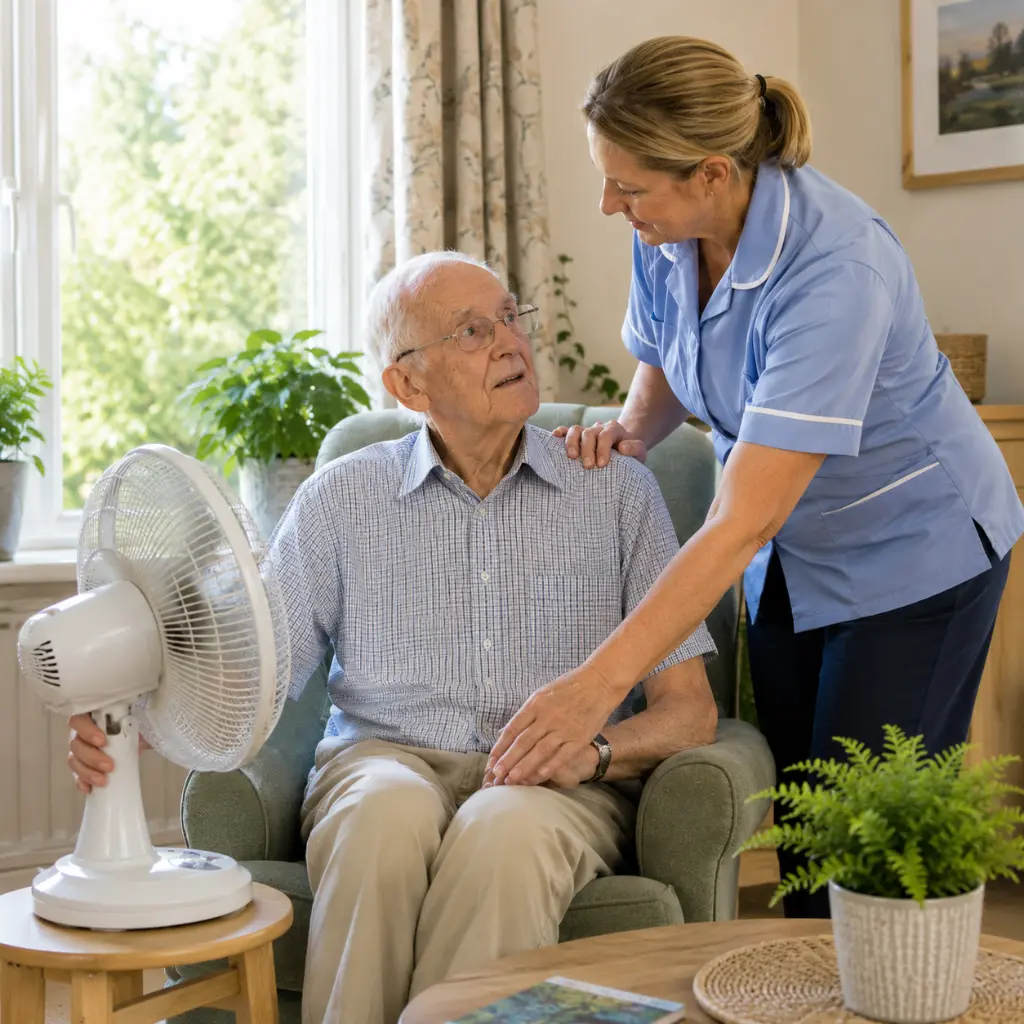
A fan helps when the room is below about 35 degrees, and it is worth turning off lamps and electricals that give off heat. Move your relative to the coolest room during the hottest hours, and keep an eye on the temperature where they sleep.
If you fix one thing, make it the bedroom. A cool room overnight makes a stifling spell far more bearable, and far safer.
Elderly Hydration Tips That Actually Work
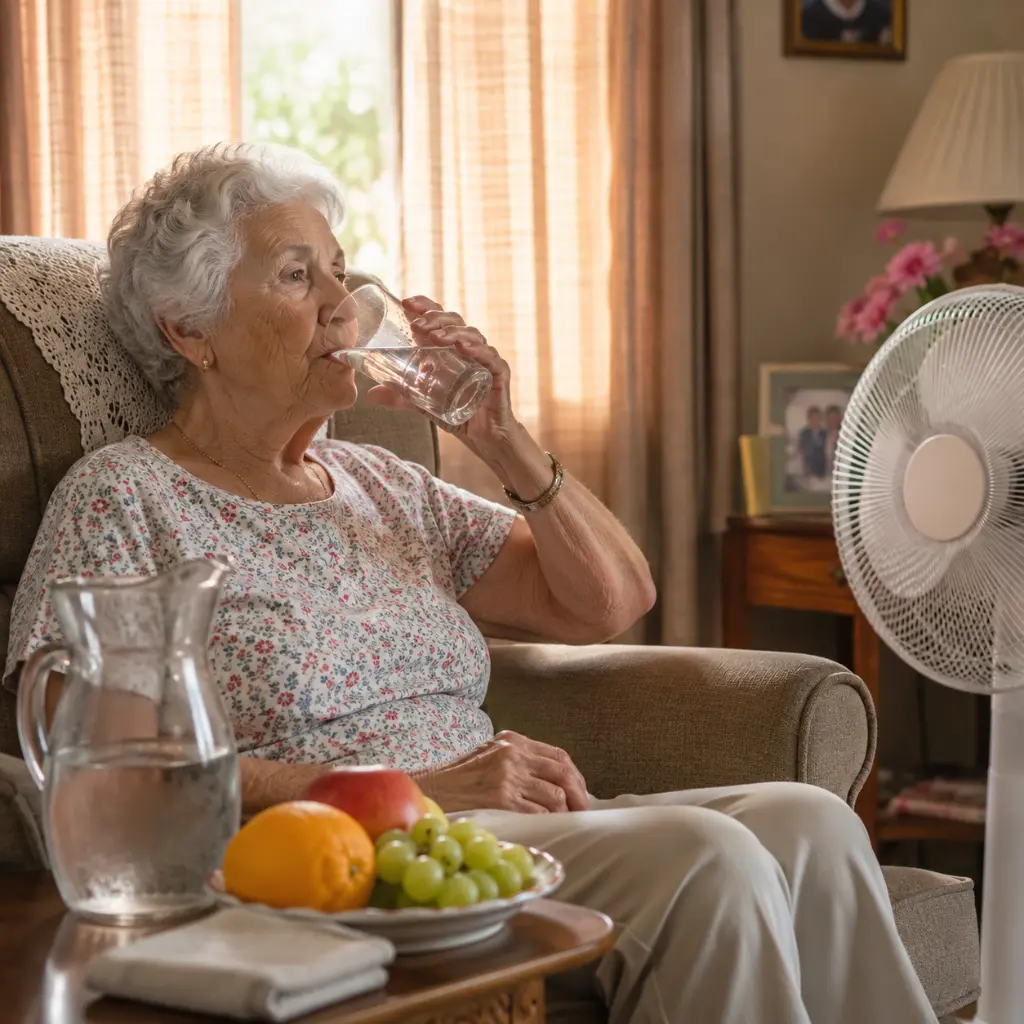
Because thirst fades with age, the golden rule is not to wait for it. Offer small drinks often rather than one big glass, and leave something within easy reach so a drink never depends on getting up.
The hydration that works is the hydration someone will actually take, so lean on drinks they like, plus water-rich foods like cucumber, melon, soups and ice lollies. Go easy on alcohol and strong caffeine, which do the opposite job.
For anyone who forgets, a gentle prompt with every visit makes all the difference. These small elderly hydration tips add up fast across a hot day.
How to Spot Heat Exhaustion in Elderly Parents
Heat exhaustion can cause tiredness, dizziness, headache, nausea, heavy sweating, muscle cramps, a fast pulse and intense thirst.
If you spot it, act calmly. Help them into a cool, shaded place, loosen or remove any unnecessary clothing, encourage them to sip water, and gently lower their body temperature with cool water, a fan, or a cold pack wrapped in a cloth placed on the neck or under the arms. Stay with them and keep an eye on how they respond. Most people begin to recover within about 30 minutes.
Call 999 if they do not improve after half an hour, if the skin is very hot but not sweating, or if there is confusion, a seizure or no response, as that can be heatstroke, which is an emergency.
Senior Heatwave Safety Tips for the Hottest Days
A few simple senior heatwave safety tips cover most hot spells, and none of them are complicated:
- Time it right: stay indoors and out of the sun between 11am and 3pm, and if your relative does go out, keep to the shade.
- Dress for it: loose, light, light-coloured clothing, a wide-brimmed hat and sunglasses outdoors.
- Protect the skin: high-factor sunscreen on any exposed skin, reapplied through the day.
- Eat light and cool: smaller, cooler meals and water-rich foods rather than heavy, hot ones.
- Mind medicines: keep taking prescribed medicines as normal, but ask the GP or pharmacist before summer whether any make heat harder to cope with, and store them as the label says.
- Check in: a daily call or visit during a hot spell is one of the most protective things you can do.
On cooler mornings, gentle senior stretching exercises can help older people stay active before the hottest part of the day, making it easier to keep moving while avoiding the midday heat.
How Home Care Helps Elderly Parents During a Heatwave
This is where steady support can make a real difference. During a hot spell, a carer dropping in for regular home visits can keep the home cool, top up drinks and keep them within reach, watch for early warning signs, and prepare light, cool meals.
That daily presence matters most for anyone living alone, and even more when dementia affects everyday awareness, since someone may not notice the heat, feel thirsty, or think to dress for it. A reassuring companionship visit is also a simple way to check on elderly parents during heatwave spells when family cannot be there.
For extra peace of mind, a personal alarm for the elderly can complement regular home care by making it easier to call for help quickly if heat-related illness or another emergency occurs.
Across Aldridge and the wider Walsall area, this is part of how our carers help people stay safe and comfortable through the summer. At Vitality Care and Support Services, we treat a hot spell as exactly the kind of moment a familiar face should be checking in.
Extra Support When Temperatures Rise
During a heatwave, even small daily tasks like drinking enough water or keeping the home cool can become more difficult for older people. A reassuring visit can provide both practical help and valuable peace of mind.
Our carers support older people throughout Aldridge and Walsall with companionship, personal care and regular home visits that adapt to the changing seasons. If you think your loved one would benefit from extra support this summer, we are always here to help.